Katrina Moriarty
Under Your Spell: A Romance Boxed Set of Masked Balls, Haunted Gardens, Magic, and MoreKatrina Moriarty is the last known member of the Moriarty family and the figure through whom the old Abbot–Moriarty family curse is offered a possible interruption. Her importance lies in the contrast between inherited grievance and chosen responsibility: although her ancestors cursed the Abbot line after losing their plantation, Katrina rejects that feud and tries to repair the historical wrong rather than preserve it.
Identity and Introduction
Katrina Moriarty lives in North Carolina, where Gertrude Snodgrass locates her after Jade Abbot asks whether any Moriartys are still living. Gertrude provides Jade with Katrina’s address, turning a centuries-old family mystery into a concrete modern investigation. The search matters because Jade is the last of the Abbots, while Katrina is the last of the Moriartys; the two women represent the surviving ends of opposing genealogies rather than merely distant branches of a family tree.
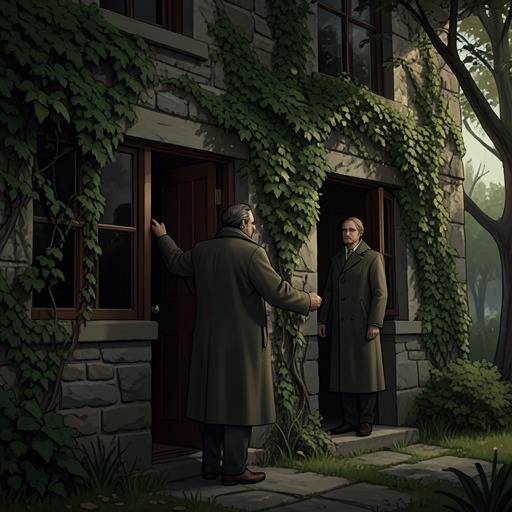
When Jade and Ryder Warren reach Katrina’s house, the first impression is deliberately disarming. Katrina answers the door wearing green face paint and a witch costume, then explains that she had been preparing for a birthday party until the birthday girl changed her mind. Her supernatural appearance therefore begins as an ordinary social mishap, even though the costume visually anticipates the power she is about to reveal. Inside, the house seems entirely normal, with photographs, artwork, and a small television offering no obvious sign of a vindictive magical lineage.
Katrina’s own identity is initially unsettled. After hearing Jade’s accusation, she says that she is the last Moriarty and admits that she has always wondered whether she might be a witch. Her uncertainty is not presented as a rejection of magic but as incomplete knowledge of an inheritance that has remained latent or unexplained. The question becomes testable when she produces a tall, thin white candle, closes her eyes, and lights it merely by opening them. The act is not entirely reliable, since Katrina says it does not always work, but its success confirms that the family history is not only legend.
Family Curse and Moral Position
The history Gertrude recounts places Katrina within a feud created by property and deception. The Abbots did not buy the plantation from the Moriartys; they acquired it through trickery, apparently through a card game, after the Moriartys had moved south from Salem, Massachusetts, in the early 1800s. In response to losing the plantation, the Moriartys laid a curse on the Abbots, and the family’s descendants generally did not live long lives. Katrina therefore inherits both a bloodline and an accusation: her family’s power is inseparable from the Abbot family’s stolen property and the punishment that followed.
Katrina’s response is strikingly different from the logic of inherited vengeance. She says that she does not care about the silly grudge between her ancestors and Jade’s, and promises that she will lift the curse if she can. That promise makes her an ethical counterforce to the family tradition. Jade is not treated as an enemy who must pay for an ancestor’s fraud, and the curse is not treated as a sacred obligation that Katrina must continue. Instead, Katrina recognizes that the Abbots have been punished enough and accepts responsibility for ending a harm she did not personally initiate.
Her position also gives the family conflict a reciprocal structure. The Abbots’ wrongdoing explains why the curse began, but the curse has outlived the original dispute and continued to consume descendants who were not responsible for the plantation’s acquisition. Katrina’s willingness to act suggests that justice cannot be reduced either to defending ancestral property or to endlessly repeating ancestral punishment. The surviving Moriarty becomes the person who can acknowledge the past without allowing it to dictate the future.
Attempt to Break the Curse
Katrina accompanies Jade and Ryder to the cursed plantation to abolish the curse. The plan gains practical urgency after her first effort proves dangerous. She turns toward the ceiling and declares that the Abbots brought a curse down on their own line, but that she has come to abolish it because they have been punished enough. Before she can complete the attempt, an invisible force flings her backward into Ryder. The impact sends all three of them through the front door, destroying it, and leaves them in a heap in the mud outside.
The failed ritual establishes that Katrina’s good intention is not enough to control the inherited magic. Bloodline grants her access to the conflict, but the curse actively resists its cancellation. Her nose bleeds during the confrontation, and she nevertheless insists that she can do it and will do it. The physical violence makes her resolve concrete: she is not merely offering sympathetic words to Jade but placing her own body in the path of a force designed to preserve the feud.
After the expulsion, Jade develops a different solution. Since the Abbot family cheated the Moriartys out of the plantation, Jade proposes returning the property to the Moriarty line by making Katrina its owner. The suggestion reframes the curse as a legal and material grievance as well as a supernatural one. Katrina’s presence makes restitution possible, while the plantation itself becomes the object through which the two family histories might be reconciled. Her attempted ritual fails, but her willingness to participate helps reveal the condition under which reconciliation may occur.
Relationships and Domestic Future
Katrina’s principal relationship in this storyline is with Jade Abbot, whose request initially brings the two surviving family lines together. Jade approaches her with anxiety and visibly struggles to name what she wants, asking whether Katrina can take the curse away, end it, or abolish it. Katrina answers with immediate generosity, promising to try rather than demanding proof of Jade’s sincerity or making her defend the actions of her ancestors. Jade responds by embracing her, a gesture that converts a feared descendant of the enemy family into a possible ally.
Ryder Warren acts as a witness and practical companion during the meeting and the journey to the plantation. Katrina’s discovery that he and Jade are the last representatives of their respective lines is shared in his presence, and he helps her reach the plantation even after the supernatural force throws them outside. His role emphasizes that the conflict is no longer a private feud between two isolated women: the attempt to end it becomes a collaborative act involving love, loyalty, and practical assistance.
The later domestic scene presents Katrina’s successful place in the restored family order through Jade’s household rather than through another confrontation. Jade and Ryder have a daughter named Jasmine, who is already one year old, and Jade is identified as Ryder’s wife. Ryder bends down to kiss Jasmine in her car seat, while Jade tickles the child and receives her sweet giggle; he then pulls Jade close and kisses her. This scene does not depict Katrina directly, but it completes the arc associated with her intervention by showing the Abbot line continuing in a loving household rather than being defined only by premature death and supernatural punishment.
Narrative Significance
Katrina Moriarty embodies the possibility that a hereditary curse can be interrupted by a descendant who refuses to confuse inheritance with obligation. Her green-painted entrance makes her appear almost theatrically witchlike, yet her defining act is not an exercise of domination. It is a promise to abolish the harm attached to her family name. Even her first magical display is modest and uncertain: a candle lights, but the larger curse throws her through a door. The contrast prevents her power from becoming effortless and keeps reconciliation tied to risk, restitution, and persistence.
Her storyline also connects family memory to material history. The curse begins with a plantation obtained through trickery and survives because neither property nor injury has been properly resolved. Katrina’s attempt to break it, followed by Jade’s proposal to return the plantation, shows that supernatural repair requires attention to the concrete injustice beneath the spell. In that structure, Katrina is neither a villainous heir nor a flawless savior. She is the last Moriarty, a tentative witch, and a moral agent who chooses to stop transmitting the past as violence.